Recombinant Mouse Activin receptor type-2B (Acvr2b), partial (Active)

In Stock
Code: CSB-MP001261MO1
Size:
100ug
100ug1mg
US$128
Quantity:
Express system: Mammalian cell
Species: Mus musculus (Mouse)
Tag Info: C-terminal 10xHis-tagged
For inquiries on large quantities or another requirements
Send an Inquiry
Start an on-line Chat
Online ordering is currently available for U.S. customers only. For orders outside the U.S., please kindly submit an inquiry or start a chat with us.

Product Details

Abbreviation
Recombinant Mouse ACVR2B protein, partial (Active)
Purity
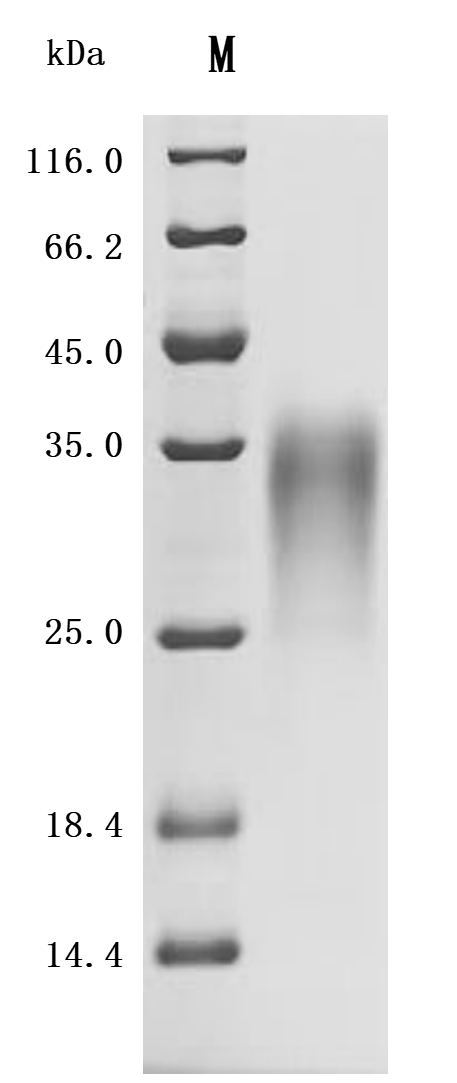
Greater than 95% as determined by SDS-PAGE.
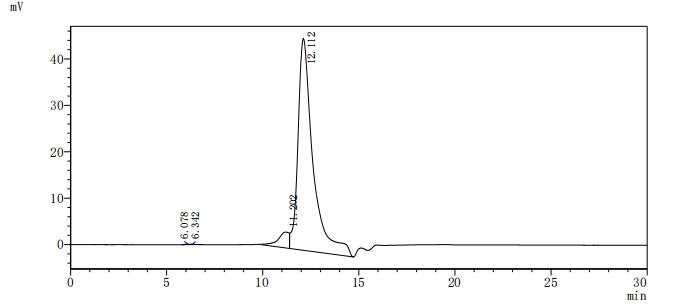
Greater than 90% as determined by SEC-HPLC.
Endotoxin
Less than 1.0 EU/ug as determined by LAL method.
Activity
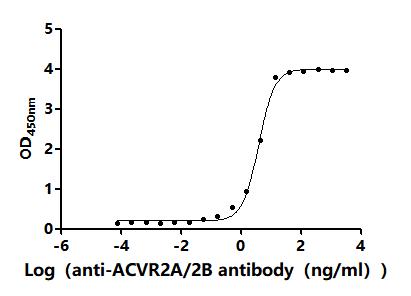
Measured by its binding ability in a functional ELISA. Immobilized Mouse Acvr2b at 2 μg/mL can bind Anti-ACVR2A&ACVR2B recombinant antibody (CSB-RA623829MA1HU). The EC50 is 3.560-4.235 ng/mL.
Target Names
Acvr2b
Uniprot NO.
Alternative Names
Activin receptor type-2B;EC: 2.7.11.30; Activin receptor type IIB (ACTR-IIB); Acvr2b
Species
Mus musculus (Mouse)
Source
Mammalian cell
Expression Region
19-137aa
Target Protein Sequence
SGRGEAETRECIYYNANWELERTNQSGLERCEGEQDKRLHCYASWRNSSGTIELVKKGCWLDDFNCYDRQECVATEENPQVYFCCCEGNFCNERFTHLPEPGGPEVTYEPPPTAPTLLT
Note: The complete sequence may include tag sequence, target protein sequence, linker sequence and extra sequence that is translated with the protein sequence for the purpose(s) of secretion, stability, solubility, etc.
If the exact amino acid sequence of this recombinant protein is critical to your application, please explicitly request the full and complete sequence of this protein before ordering.
Mol. Weight
15.2 kDa
Protein Length
Partial
Tag Info
C-terminal 10xHis-tagged
The tag type will be determined during production process. If you have specified tag type, please tell us and we will develop the specified tag preferentially.
Buffer
Lyophilized from a 0.2 μm filtered PBS, 6% Trehalose, pH 7.4
Storage
Store at -20°C/-81°C upon receipt, aliquoting is necessary for mutiple use. Avoid repeated freeze-thaw cycles.
Lead Time
3-7 business days
Note: All of our proteins are default shipped with normal blue ice packs, if you request to ship with dry ice, please communicate with us in advance and extra fees will be charged.
Notes
Repeated freezing and thawing is not recommended. Store working aliquots at 4℃ for up to one week.
Shelf Life
The shelf life is related to many factors, storage state, storage temperature and the stability of the product itself. Generally, the shelf life of lyophilized form is 6 months at -20°C/-80°C from the date of receipt.
Troubleshooting and FAQs
Datasheet & COA
Please contact us to get it.
Images
  • (Tris-Glycine gel) Discontinuous SDS-PAGE (reduced) with 5% enrichment gel and 15% separation gel.
  • Activity
    Measured by its binding ability in a functional ELISA. Immobilized Mouse Acvr2b at 2 μg/ml can bind Anti-ACVR2A&ACVR2B recombinant antibody (CSB-RA623829MA1HU). The EC50 is 3.560-4.235 ng/mL.
  • The purity of ACVR2B was greater than 90% as determined by SEC-HPLC
Description

Activin receptor type-2B mediates signaling by activin and related TGF-β superfamily ligands, making it a critical node in pathways governing muscle homeostasis, metabolism, and developmental processes. This extracellular domain construct (aa 19–137) produced in mammalian cells demonstrates quantifiable antibody-binding activity with an EC50 of 3.560–4.235 ng/mL in functional ELISA, confirming that the recombinant protein retains conformational epitopes required for receptor-ligand interaction studies and therapeutic antibody screening. The mammalian expression system supports native glycosylation and disulfide bond formation, features that align with standards expected in surface plasmon resonance and biolayer interferometry experiments for affinity characterization of blocking antibodies or competitive inhibitors. With purity exceeding 95% by SDS-PAGE and endotoxin levels below 1.0 EU/μg, this protein provides a suitable basis for drug discovery assays targeting Acvr2b, including small-molecule inhibitor screening and epitope mapping of biologics designed to modulate activin signaling in metabolic or muscle-wasting disease models.


Customer Reviews and Q&A

 Customer Reviews

Target Background

Function(From Uniprot)
Transmembrane serine/threonine kinase activin type-2 receptor forming an activin receptor complex with activin type-1 serine/threonine kinase receptors (ACVR1, ACVR1B or ACVR1c). Transduces the activin signal from the cell surface to the cytoplasm and is thus regulating many physiological and pathological processes including neuronal differentiation and neuronal survival, hair follicle development and cycling, FSH production by the pituitary gland, wound healing, extracellular matrix production, immunosuppression and carcinogenesis. Activin is also thought to have a paracrine or autocrine role in follicular development in the ovary. Within the receptor complex, the type-2 receptors act as a primary activin receptors (binds activin-A/INHBA, activin-B/INHBB as well as inhibin-A/INHA-INHBA). The type-1 receptors like ACVR1B act as downstream transducers of activin signals. Activin binds to type-2 receptor at the plasma membrane and activates its serine-threonine kinase. The activated receptor type-2 then phosphorylates and activates the type-1 receptor. Once activated, the type-1 receptor binds and phosphorylates the SMAD proteins SMAD2 and SMAD3, on serine residues of the C-terminal tail. Soon after their association with the activin receptor and subsequent phosphorylation, SMAD2 and SMAD3 are released into the cytoplasm where they interact with the common partner SMAD4. This SMAD complex translocates into the nucleus where it mediates activin-induced transcription. Inhibitory SMAD7, which is recruited to ACVR1B through FKBP1A, can prevent the association of SMAD2 and SMAD3 with the activin receptor complex, thereby blocking the activin signal. Activin signal transduction is also antagonized by the binding to the receptor of inhibin-B via the IGSF1 inhibin coreceptor.
Gene References into Functions
  1. The current study reveals that ActRIIB activation by activin A induces muscle catabolism primarily through the activation of p38beta MAPK-mediated catabolic signalling that activates the ubiquitin-proteasome pathway and the autophagy-lysosome pathway. PMID:27897407
  2. The endoplasmic reticulum stress stress and unfolded protein response are increased in mdx muscle. However, these processes are not distinctly improved by voluntary exercise or blocking activin receptor IIB ligands and thus do not appear to be optimal therapeutic choices for improving proteostasis in Duchenne muscular dystrophy. PMID:27554968
  3. Data, including data from studies using transgenic mice, suggest that osteoblasts deficient in Acvr2A exhibit un-characteristic features; osteoclasts deficient in Acvr2A or Acvr2B or both appear normal. Acvr2A-deficient mice exhibit significantly increased femoral trabecular bone volume at 6 weeks of age; Acvr2B-deficient mice exhibit no significant change in any bone parameter. PMID:28659341
  4. Differential muscle hypertrophy is associated with satellite cell numbers and Akt pathway activation following activin type IIB receptor inhibition in Mtm1 PMID:24726641
  5. ActRIIB inhibition enhanced energy expenditure only at ambient temperature or in the cold, where nonshivering thermogenesis is minimal, suggesting that brown fat activation plays a prominent role in the metabolic actions of ActRIIB inhibition. PMID:22586266
  6. findings best fit a model in which BMP3, produced by mature bone cells, acts to reduce BMP signaling through Acvr2b in skeletal progenitor cells, limiting their differentiation to mature osteoblasts PMID:22074949
  7. Functional redundancy in osteoblast differentiation is observed between bone morphogenetic protein receptor BMPR-II and ActR-IIB. PMID:21503889
  8. Inhibition of activin receptor type IIB increases strength and lifespan in myotubularin-deficient mice. PMID:21281811
  9. Akt isoforms are not essential for for the ability of ActRIIB inhibition to regulate muscle size and function . PMID:20856813
  10. ActRIIB plays a role in the specification of left-sidedness in developing mice PMID:12112458
  11. Activin type IIB(ActRIIB) and its subfamily receptor, Activin type IIA (ActRIIA), cooperatively mediate the Gdf11 signal in patterning the axial vertebrae PMID:12414726
  12. ActRIIB is expressed in the early development of thymocytes. PMID:16477644
  13. genetic evidence strongly suggested that ActRIIB and Smad2 function in the same signaling pathway to regulate axial patterning and pancreas islet formation by means of a threshold mechanism. PMID:17849440
  14. expression of MSTN and its associated binding proteins can be modulated in adipose tissue and skeletal muscle by chronic obesity PMID:18334608
  15. Data suggest that BMP3 exerts its effects in the skeleton by altering signaling through ActRIIB in chondrocytes and the periosteum, and this results in defects in bone collar formation and late hypertrophic chondrocyte maturation. PMID:19653325

Show More

Hide All

Subcellular Location
Cell membrane; Single-pass type I membrane protein.
Protein Families
Protein kinase superfamily, TKL Ser/Thr protein kinase family, TGFB receptor subfamily
Database Links
icon of phone
Call us
301-363-4651 (Available 9 a.m. to 5 p.m. CST from Monday to Friday)
icon of address
Address
No. 269, Shendun 5th Road, Donghu Hi-Tech Development Area, Hubei Province, 430206, P.R.China
icon of social media
Join us with

Subscribe newsletter

Leave a message

* To protect against spam, please pass the CAPTCHA test below.
CAPTCHA verification
© 2007-2025 CUSABIO TECHNOLOGY LLC All rights reserved. 鄂ICP备15011166号-1
Select 0 Products