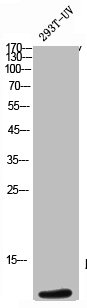
APOC3 antibody; APO C3 antibody; Apo CIII antibody; Apo-CIII antibody; APOC 3 antibody; ApoC III antibody; ApoC-III antibody; APOC3 antibody; APOC3_HUMAN antibody; ApoCIII antibody; Apolipoprotein C III antibody; Apolipoprotein C-III antibody; Apolipoprotein C3 antibody; ApolipoproteinCIII antibody; MGC150353 antibody
Raised in
Rabbit
Species Reactivity
Human
Immunogen
Synthesized peptide derived from the C-terminal region of Human ApoC-III.
Immunogen Species
Homo sapiens (Human)
Conjugate
Non-conjugated
Isotype
IgG
Purification Method
The antibody was affinity-purified from rabbit antiserum by affinity-chromatography using epitope-specific immunogen.
Concentration
It differs from different batches. Please contact us to confirm it.
Buffer
Liquid in PBS containing 50% glycerol, 0.5% BSA and 0.02% sodium azide.
Tested Applications
WB, ELISA
Storage
Upon receipt, store at -20°C or -80°C. Avoid repeated freeze.
Lead Time
Basically, we can dispatch the products out in 1-3 working days after receiving your orders. Delivery time maybe differs from different purchasing way or location, please kindly consult your local distributors for specific delivery time.
Note: All of our proteins are default shipped with normal blue ice packs, if you request to ship with dry ice, please communicate with us in advance and extra fees will be charged.
Usage
For Research Use Only. Not for use in diagnostic or therapeutic procedures.
Component of triglyceride-rich very low density lipoproteins (VLDL) and high density lipoproteins (HDL) in plasma. Plays a multifaceted role in triglyceride homeostasis. Intracellularly, promotes hepatic very low density lipoprotein 1 (VLDL1) assembly and secretion; extracellularly, attenuates hydrolysis and clearance of triglyceride-rich lipoproteins (TRLs). Impairs the lipolysis of TRLs by inhibiting lipoprotein lipase and the hepatic uptake of TRLs by remnant receptors. Formed of several curved helices connected via semiflexible hinges, so that it can wrap tightly around the curved micelle surface and easily adapt to the different diameters of its natural binding partners.
Gene References into Functions
ApoCIII may mediate the effects of ANGPTL8 on triglyceride metabolism.PMID:30021607
The S2 allele of the SstI polymorphism in the apoC3 gene is associated with plasma apoCIII levels in the Li population. In combination with unfavorable lipid profiles, this might contribute to susceptibility to atherosclerosis.PMID:29162127
Data indicate effects of a loss-of-function Ala43Thr substitution in apolipoprotein C3 (APOC3) rs147210663.PMID:29237685
the present study demonstrates major modifications of the proteome in patients with cerebral lacunar infarction(LACI). The ApoC-III enrichment of the HDL of patients with cerebral lacunar infarction may cause a reduction in the anti-inflammatory ability of HDL, which may contribute to the progression of the diseasePMID:29115584
C3(QK) variant is a gain-of-function mutation that can stimulate VLDL1 production, through enhanced DNLPMID:28887372
Review/Meta-analysis: APOC3 polymorphisms were not association with increased risk of ischemic strokePMID:28865324
rs4225 in the 3'-UTR of APOC3 might contribute to the risk of coronary heart disease by interfering with miR-4271 binding.PMID:27624799
APOC3 modulates HDL structure and function, while it selectively promotes BAT metabolic activationPMID:28701354
apoC-III potently inhibits triglyceride hydrolysis when LPL is bound to GPIHBP1PMID:28694296
intestinal apoC-III overexpression results in the secretion of smaller, less dense chylomicron particles along with reduced triacylglycerol secretion from the intestinePMID:28159868
Aromatic residues in the C terminus of apolipoprotein C-III mediate lipid binding and LPL inhibitionPMID:28159869
No evidence that APOC3 3'UTR variant SstI modulates expression of liver/intestinal miRNAs in hypertriglyceridemia.PMID:27794214
A rare variant in APOC3(rs138326449) has been associated with triglyceride, very low-density lipoprotein, and high-density lipoprotein levels, as well as risk of coronary heart disease. Effects are unlikely to be solely predictable by the action of APOC3 through LPL.PMID:27114411
both human APOC3 A43T heterozygotes and mice expressing human APOC3 A43T display markedly reduced circulating apoC-III levels. In mice, this reduction is due to impaired binding of A43T apoC-III to lipoproteins and accelerated renal catabolism of free apoC-III.PMID:28825717
Gene-level meta-analysis with other studies reporting burden signals at APOC3 provides robust evidence for a replicable cardioprotective rare variant aggregationPMID:27146844
studied the associations of apoC-III, endothelial function and diabetic peripheral neuropathyPMID:28641786
Plasma levels of proprotein convertase subtilisin/kexin type 9 (PCSK9), apolipoprotein C-III (apoC3) and small dense low density lipoprotein cholesterol (sdLDL-C) showed significant interactions with current dyslipidemias, and were predictive in the screening.PMID:27713142
Novel sequencing techniques are detecting rare variants with larger effect sizes (eg, APOC3) , which may further improve on Cardiovascular disease risk prediction.PMID:27650930
The APOC3 rs2070666 A allele is a risk factor for NAFLD independent of obesity, dyslipidemia, and PNPLA3 rs738409, and it might contribute to increased liver fat content in Chinese Han population.PMID:27059980
plasma levels significantly associated with the development and severity of metabolic syndromePMID:28245894
ApoC-III levels are significantly associated with incident coronary artery disease risk. Elevated levels of remnant lipoproteins, small dense low-density lipoprotein, and low-grade inflammation may explain this association.PMID:28473441
The authors findings confirm an association of APOC3 with gout.PMID:27094595
Accumulating evidence indicates that apolipoprotein C-III is a multifaceted protein which not only regulates triglyceride metabolism, but also participates in the atherosclerotic lesion formation and several other pathological processes involved in atherosclerosis.PMID:27770802
Our results showed that APOC3 was closely associated with the inflammatory process in ECs, and that this process was characterized by the increased expression of TNF-alpha. Inflammatory processes further disrupted the tight junctions (TJs) between HUVECs by causing increased expression of JAM-1.PMID:27619170
review of its clinical implications and targeted therapies[review]PMID:27318213
Transgenic mice expressing human APOC3in the C57BL/6J background have been described. The study found that hypertriglyceridemia per se is not an independent risk factor for beta cell dysfunction in ApoC3 transgenic mice.PMID:27226540
ApoA-1 and ApoC-III may be used as differentiating and predictive markers for SCLC [ small cell lung cancer ].PMID:26996551
The results of our meta-analysis point to a strong link between both APOA5 -1131T>C and APOC3 -455T>C polymorphisms and an increased risk of coronary heart disease .PMID:26782469
HDL-apoCIII has a significant and positive association with coronary heart disease .PMID:26452348
APOA5 -1131 T > C and APOC3 -455 T > C SNPs may play potent roles in the development and progression of coronary heart disease. (Meta-analysis)PMID:26387083
D25V apolipoprotein C-III is a new human amyloidogenic protein and the first conferring cardioprotection.PMID:26790392
The current body of literature includes several methodologically sound studies that together provide consistent evidence for an association of cardiovascular events with blood apoC-III level in total plasma or in VLDL and LDL.PMID:26228667
3238C>G polymorphism of ApoC3 gene appears to augment the propensity to develop T2DM, while -482C>T to negatively affect lipid metabolism in Saudi subjects.PMID:26247234
Data suggest that apolipoprotein C-III (ApoCIII) adopts an alternate helical conformation on the bilayer which could have functional implications.PMID:26301570
Lipoprotein associated phospholipase A2 activity and apolipoprotein C3 loss-of-function variants are involved in cardiovascular diseasePMID:26117401
genetic variants associated with elevated triglycerides and VLDL and risk of intracerebral hemorrhagePMID:25994187
meta-analysis demonstrates significant association between rs5128 polymorphism and higher levels of APOC3, TG, TC and LDL-CPMID:25928461
ApoC3 Sst I and T-455C polymorphisms might be associated with coronary heart disease risk.PMID:24430880
The objective of this study was to evaluate the reliability of MALDI-TOF mass spectrometry of apoC-III for the detection and characterization of congenital disorders of glycosylation-associated O-glycan defects.PMID:25641685
APOC3 loss-of- function mutation carriers had reduced plasma triglycerides, higher HDL-C,and a decreased burden of coronary arterial calcification.PMID:26516010
In examined Kyrgyz ethnic population the most frequent was heterozygous TC genotype of T455C polymorphism of apo C-III.PMID:26625519
In persons with T2DM, increased plasma ApoC-III is associated with higher triglycerides, less favorable cardiometabolic phenotypes, and higher coronary artery calcification, a measure of subclinical atherosclerosis.PMID:26069232
Obesity favors apolipoprotein E- and C-III-containing high density lipoprotein subfractions associated with risk of heart disease.PMID:24966274
The polymorphism T-455C in APOC3 gene and elevated serum triglycerides were associated with NAFLD. However, we did not find a significant association of C-482T polymorphism (rs2854117) of APOC3 gene with NAFLD.PMID:25319715
these results suggest that plasma apoA-I could be a sensitive Alzheimer's disease biomarker and individuals with low plasma levels of apoC-III are at risk for Alzheimer's disease.PMID:24685634
APOC3 R19X allele participants had approximately half the triglyceride levels, >20% higher high-density lipoprotein cholesterol levels, and lower low-density lipoprotein cholesterol levels compared with noncarrier participants.PMID:25363704
The APOC3 3238 G allele might contribute to an increased risk of coronary artery disease as a result of its effect on triglycerides and VLDL-cholesterol metabolism.PMID:25380998
Confirming the negative role of APOC-III in TG metabolism can be used as therapeutic target for the management of hypertriglyceridemia and reduction of ischemic cardiovascular events.PMID:25994465
APOC3 (-455T>C) genetic variation is involved in the susceptibility to developing NAFLD in the Southern Chinese Han population.PMID:25320541