CBLC Antibody

Code: CSB-PA892346ESR2HU
Size:
20μl
20μl50μl100μl
US$83
Quantity:
Species Reactivity: Human
Raised in: Rabbit
Application: ELISA, WB, IHC
For inquiries on large quantities or another requirements
Send an Inquiry
Start an on-line Chat
Online ordering is currently available for U.S. customers only. For orders outside the U.S., please kindly submit an inquiry or start a chat with us.

Product Details

Uniprot NO.
Target Names
CBLC
Alternative Names
CBLC antibody; CBL3 antibody; RNF57E3 ubiquitin-protein ligase CBL-C antibody; EC 2.3.2.27 antibody; RING finger protein 57 antibody; RING-type E3 ubiquitin transferase CBL-C antibody; SH3-binding protein CBL-3 antibody; SH3-binding protein CBL-C antibody; Signal transduction protein CBL-C antibody
Raised in
Rabbit
Species Reactivity
Human
Immunogen
Recombinant Human E3 ubiquitin-protein ligase CBL-C protein (245-474AA)
Immunogen Species
Homo sapiens (Human)
Conjugate
Non-conjugated
Isotype
IgG
Purification Method
Antigen Affinity Purified
Concentration
It differs from different batches. Please contact us to confirm it.
Buffer
PBS with 0.02% sodium azide, 50% glycerol, pH7.3.
Tested Applications
ELISA, WB, IHC
Recommended Dilution
ApplicationRecommended Dilution
WB1:500-1:2000
IHC1:20-1:200
Storage
Upon receipt, store at -20°C or -80°C. Avoid repeated freeze.
Lead Time
Basically, we can dispatch the products out in 1-3 working days after receiving your orders. Delivery time maybe differs from different purchasing way or location, please kindly consult your local distributors for specific delivery time.
Note: All of our proteins are default shipped with normal blue ice packs, if you request to ship with dry ice, please communicate with us in advance and extra fees will be charged.
Usage
For Research Use Only. Not for use in diagnostic or therapeutic procedures.
Datasheet & COA
Images
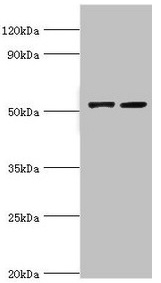
  • Western blot
    All lanes: CBLC antibody at 14µg/ml
    Lane 1: A549 whole cell lysate
    Lane 2: Hela whole cell lysate
    Secondary
    Goat polyclonal to rabbit IgG at 1/10000 dilution
    Predicted band size: 53, 48 kDa
    Observed band size: 53 kDa

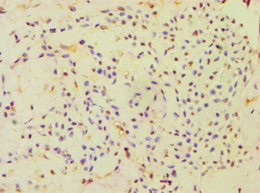
  • Immunohistochemistry of paraffin-embedded human breast cancer using CSB-PA892346ESR2HU at dilution of 1:100

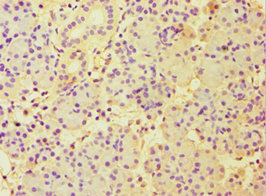
  • Immunohistochemistry of paraffin-embedded human pancreatic tissue using CSB-PA892346ESR2HU at dilution of 1:100

Customer Reviews and Q&A

 Customer Reviews

Target Background

Function(From Uniprot)
Acts as an E3 ubiquitin-protein ligase, which accepts ubiquitin from specific E2 ubiquitin-conjugating enzymes, and then transfers it to substrates promoting their degradation by the proteasome. Functionally coupled with the E2 ubiquitin-protein ligases UB2D1, UB2D2 and UB2D3. Regulator of EGFR mediated signal transduction; upon EGF activation, ubiquitinates EGFR. Isoform 1, but not isoform 2, inhibits EGF stimulated MAPK1 activation. Promotes ubiquitination of SRC phosphorylated at 'Tyr-419'. In collaboration with CD2AP may act as regulatory checkpoint for Ret signaling by modulating the rate of RET degradation after ligand activation; CD2AP converts it from an inhibitor to a promoter of RET degradation; the function limits the potency of GDNF on neuronal survival.
Gene References into Functions
  1. Methylmalonic aciduria with homocystinuria cblC is a multisystemic metabolic disease affecting cobalamin metabolism. The presence of retinal alterations in cblC is a common feature and it is reported to develop more frequently and into a more severe form in the early-onset phenotype, suggesting to some extent a correlation with the biochemical phenotype PMID:28481040
  2. Data suggest that ubiquitin ligase CBLC controls mostly network organization of the Golgi Apparatus. PMID:26393512
  3. Silencing of CBLC causes increased sensitivity to PARP1 inhibitor olaparib in breast cancer cell line models and that defective homologous recombination (HR) DNA repair is the likely cause. PMID:25883215
  4. the effects of two pathogenic missense mutations on the the catalytic activities of the human B12-processing chaperone CblC PMID:25809485
  5. This retrospective multicentre study evaluates clinical, biochemical and genetic findings in 88 cblC patients PMID:24599607
  6. The ubiquitin ligase activity of Cbl-c by the direct interaction of the LIM zinc coordinating domain of Hic5 is demonstrated. PMID:23145173
  7. the N terminus of Cbl-c contributes to the binding to the E2 and phosphorylation of Tyr-341 leads to a decrease in affinity and an increase in the E3 activity of Cbl-c PMID:20525694
  8. Data demonstrate that two E3 ligases of different classes, CBLC and AIP4, can interact and cooperate to down-regulate EGFR signaling. PMID:12226085
  9. c-Cbl is a negative regulator of hepatocyte growth factor/receptor tyrosine kinase Met signaling in B cells, mediating ubiquitination and, consequently, proteosomal degradation of Met, with a role in Met-mediated tumorigenesis. PMID:12244174
  10. Src is a preferential target of Cbl-c for degradation PMID:14661060
  11. ubiquitin protein ligase activity is regulated in c-Cbl by phosphorylation-induced conformational change and constitutive activation by tyrosine to glutamate point mutations PMID:15117950

Show More

Hide All

Tissue Specificity
Ubiquitous.
Database Links

HGNC: 15961

UNIGENE: Hs.466907

KEGG: hsa:23624

STRING: 9606.ENSP00000270279

OMIM: 608453

icon of phone
Call us
301-363-4651 (Available 9 a.m. to 5 p.m. CST from Monday to Friday)

icon of address
Address
No. 269, Shendun 5th Road, Donghu Hi-Tech Development Area, Hubei Province, 430206, P.R.China
icon of social media
Join us with

Subscribe newsletter

Leave a message

* To protect against spam, please pass the CAPTCHA test below.
CAPTCHA verification
© 2007-2025 CUSABIO TECHNOLOGY LLC All rights reserved. 鄂ICP备15011166号-1
Select 0 Products