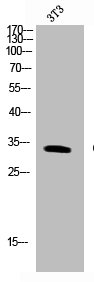
Synthesized peptide derived from the N-terminal region of Human PAR-4.
Immunogen Species
Homo sapiens (Human)
Conjugate
Non-conjugated
Isotype
IgG
Purification Method
The antibody was affinity-purified from rabbit antiserum by affinity-chromatography using epitope-specific immunogen.
Concentration
It differs from different batches. Please contact us to confirm it.
Buffer
Liquid in PBS containing 50% glycerol, 0.5% BSA and 0.02% sodium azide.
Tested Applications
WB, ELISA
Storage
Upon receipt, store at -20°C or -80°C. Avoid repeated freeze.
Lead Time
Basically, we can dispatch the products out in 1-3 working days after receiving your orders. Delivery time maybe differs from different purchasing way or location, please kindly consult your local distributors for specific delivery time.
Note: All of our proteins are default shipped with normal blue ice packs, if you request to ship with dry ice, please communicate with us in advance and extra fees will be charged.
Usage
For Research Use Only. Not for use in diagnostic or therapeutic procedures.
Receptor for activated thrombin or trypsin coupled to G proteins that stimulate phosphoinositide hydrolysis. May play a role in platelets activation.
Gene References into Functions
Data suggested that PAR4-AP-induced platelet reactivity between PAR4 rs773902 was associated with altered intensity of Ca(2+) mobilization and ERK activation.PMID:29289806
Thrombin binding to extra-cellular loop II (ECLII) of PAR4 is important for its cleavage and activation of PAR4.PMID:28448853
PAR4 has a role in mediating platelet aggregation; its blockade provides antithrombotic activityPMID:28053157
PAR4 is required for platelet procoagulant function during thrombus formation in human bloodPMID:26878340
Prospective study demonstrated that AHRR and F2RL3 methylation levels had inverse relationships with self-reported smoking status and accurately discriminated for both current- and former- smoking. Moreover, methylation markers distinguished former smokers from never-smokers with high accuracy and significantly associated with an increased risk of lung cancer.PMID:28453567
F2RL3 variants have the potential to markedly alter platelet PAR4 reactivity particularly after exposure to therapeutic PAR1 antagonists.PMID:26966273
these findings are the first to show that internalization of activated PAR4 is linked to proper ERK1/2 and Akt activation.PMID:27402844
an intracellular PAR4 C-terminal motif that regulates calcium signaling and beta-arrestin interactions, was identified.PMID:28126849
the contribution of PAR1 and PAR4 to thrombin-mediated activation of the platelet fibrin receptor (GPIIbIIIa), is reported.PMID:27784794
Suppression of PAR4 expression has no significant effect on the proliferation of SW620 cells, but can inhibit the migration of the cells.PMID:27126938
Both GPIbalpha and PAR4 are required for thrombin-induced reactive oxygen species formation in human platelets.PMID:26569550
Bladder PAR activation elicits urothelial MIF release and urothelial MIF receptor signaling at least partly through CXCR4 to result in abdominal hypersensitivity without overt bladder inflammationPMID:26020638
protease-activated receptor 4 and Trefoil factor 2 are expressed in human colorectal cancerPMID:25876034
The PAR4 expression and activation via intracellular signaling pathways and the role of PAR4 signaling pathways in the development and maintenance of pain.PMID:25664811
This review summarizes the roles of PAR4 in coagulation and other extracellular protease pathways.PMID:25120239
Findings suggested that F2RL3 methylation is a very strong predictor of lung cancer risk and mortality, particularly at older age.PMID:25821117
Lower F2RL3 methylation is a strong predictor of mortality, including all-cause, cardiovascular, cancer and other mortality. Systemic adverse effects of smoking may be mediated by pathways associated with F2RL3 methylation.PMID:24510982
exosite II is critical for activation of PAR4.PMID:24990072
provide evidence against the hypothesis that PAR-1 and PAR-4 stimulation of platelets trigger differential release of alpha-granulesPMID:24776597
Washed platelets from black volunteers were hyperaggregable in response to PAR4-mediated platelet stimulation compared with whites.PMID:25278289
PAR-4 appears to play a hitherto unsuspected role in diabetic vasculopathy.PMID:25239438
Quantitative trait locus analysis identified 3 common single nucleotide polymorphisms in the PAR4 gene (F2RL3) associated with PAR4-induced platelet aggregation. Thr120 was more common in blacks than whites.PMID:25293779
PAR4-P2Y12 association supports arrestin-mediated sustained signaling to Akt.PMID:24723492
PAR4 and GPVI-mediated platelet reactivity involves 12-lipoxygenasePMID:23784669
Phosphatidylcholine transfer protein contributes to the racial difference in PAR4-mediated platelet activation.PMID:24216752
The F2RL3 rs773857 risk allele homozygotes are associated with risk for increased platelet count and hyperactivity.PMID:22228373
Stimulation of PAR4 on platelets leads to faster and more robust thrombin generation, compared to PAR-1 stimulation.PMID:23307185
The results seem to indicate methylation in F2RL3 to be a potential mediator of the detrimental impact of smoking and mortality in coronary heart diseasePMID:22511653
PAR4 is down-regulated in the colonic mast cells of post-infectious irritable bowel syndrome.PMID:22151913
Novel role for proteinase-activated receptor 2 (PAR2) in membrane trafficking of proteinase-activated receptor 4 (PAR4).PMID:22411985
mutations that disrupted dimer formation had reduced calcium mobilization in response to the PAR4 agonist peptide.PMID:22318735
PKC inhibition markedly enhances Ca2+ signaling and phosphatidylserine exposure downstream of protease-activated receptor-1 but not protease-activated receptor-4 in human platelets.PMID:21649850
down-regulation of PAR4 expression occurs frequently in gastric cancers and exhibits association with more aggressive gastric cancerPMID:21635966
The present study elucidates further differences in human platelet PAR signalling regulation and provides evidence for a cross-talk in which PAR4 signalling counteracts mechanisms involved in PAR1 signalling down-regulation.PMID:21391917
High glucose enhances smooth muscle cell responsiveness to thrombin through transcriptional upregulation of PAR-4, mediated via PKC and NFkappaB.PMID:21164077
Protease-activated receptor signaling in platelets activates cytosolic phospholipase A2alpha differently for cyclooxygenase-1 and 12-lipoxygenase catalysis.PMID:21127289
Results suggest that lower levels of protease-activated receptors 1 and 4 contribute to the poor thrombin induced aggregation observed with newborn platelets, which can not be compensated by higher levels of GPIbalpha.PMID:20807173
Low concentrations of alpha-thrombin accelerate tissue factor-induced thrombin generation on the surface of vascular smooth muscle cells, and this effect is mediated by PAR-3 and PAR-4.PMID:20930172
Human cytomegalovirus induces PARs expression through transcriptional activation in endothelial cells, increasing sensitivity to thrombin.PMID:20155436
SPSB1 and SPSB4 bind strongly to both Par-4 and VASA peptides.PMID:20561531
Data show that PAR1 and PAR4-activating peptides were as effective as thrombin in inducing annexin V binding in combination with collagen-related peptide in diluted whole blood and platelet rich plasma, but not in washed platelets.PMID:20230207
Thrombin enhances the migration of chondrosarcoma cells by increasing MMP-2 and MMP-13 expression through the PAR/PLC/PKCalpha/c-Src/NF-kappaB signal transduction pathway.PMID:20175118
Complement protease MASP-1 activates human endothelial cells through PAR4 cleavagePMID:19667088
When expressed in respiratory epithelial cells and cell lines, protease-activated receptor 4 (PAR4)induces the release of IL-6, IL-8, and PGE2.PMID:11907122
Activation of platelets via the PAR4 pathway, by treatment with PAR4 agonist peptide AYPGKF, results in thrombin-induced thromboxane production by platelets.PMID:12006403
The signal from PAR4 stabilizes platelet-platelet aggregate formation in the absence of P2Y12 activation by ADP.PMID:12008957
PAR4 is activated independently of GPIbalpha and ADPPMID:12871418
Important role in regulation of thromboxane formation in platelets responding to thrombin through prolonged elevation of [Ca(2+)](i) and activation of phospholipase A(2). Can be activated by relatively low concentrations of thrombin in human platelets.PMID:12888878
Protease-activated receptor-4 exodomains utilize dual prolines and an anionic retention motif for thrombin recognition and cleavage.PMID:13678420
PAR-1 and PAR-4 have roles in activating GPIb translocation into the cytoskeleton in plateletsPMID:14521606
Show
More
Hide
All
Subcellular Location
Cell membrane; Multi-pass membrane protein.
Protein Families
G-protein coupled receptor 1 family
Tissue Specificity
Widely expressed, with highest levels in lung, pancreas, thyroid, testis and small intestine. Not expressed in brain, kidney, spinal cord and peripheral blood leukocytes. Also detected in platelets.