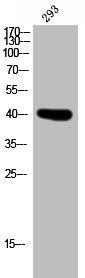
Synthesized peptide derived from the C-terminal region of Human PD2R.
Immunogen Species
Homo sapiens (Human)
Conjugate
Non-conjugated
Isotype
IgG
Purification Method
The antibody was affinity-purified from rabbit antiserum by affinity-chromatography using epitope-specific immunogen.
Concentration
It differs from different batches. Please contact us to confirm it.
Buffer
Liquid in PBS containing 50% glycerol, 0.5% BSA and 0.02% sodium azide.
Tested Applications
WB, IHC, IF, ELISA
Storage
Upon receipt, store at -20°C or -80°C. Avoid repeated freeze.
Lead Time
Basically, we can dispatch the products out in 1-3 working days after receiving your orders. Delivery time maybe differs from different purchasing way or location, please kindly consult your local distributors for specific delivery time.
Note: All of our proteins are default shipped with normal blue ice packs, if you request to ship with dry ice, please communicate with us in advance and extra fees will be charged.
Usage
For Research Use Only. Not for use in diagnostic or therapeutic procedures.
Receptor for prostaglandin D2 (PGD2). The activity of this receptor is mainly mediated by G(s) proteins that stimulate adenylate cyclase, resulting in an elevation of intracellular cAMP. A mobilization of calcium is also observed, but without formation of inositol 1,4,5-trisphosphate. Involved in PLA2G3-dependent maturation of mast cells. PLA2G3 is secreted by immature mast cells and acts on nearby fibroblasts upstream to PTDGS to synthesize PGD2, which in turn promotes mast cell maturation and degranulation via PTGDR.
Gene References into Functions
PGD2 signaling through the D-prostanoid receptor 1 (DP1) receptor is necessary for optimal microglia/macrophage activation and IFN expression after infection with a neurotropic coronavirusPMID:28630327
Polymorphisms of prostaglandin D receptor (PTGDR) gene influence basal promoter activity and gene expression, as well as the cytokine secretory pattern.PMID:29088248
An association was found between single nucleotide polymorphisms of the PTGFR and SLCO2A1 genes and the response to latanoprost in Han Chinese patients with glaucoma. These SNPs may be important determinants of differential response to latanoprost.PMID:27336732
EP2 receptors seem to be able to distinguish endogenous ligands PGD2, PGE2 or prostaglandin F2alpha better than DP receptors.PMID:27636113
PGD2 markedly augments disease activity through its ability to enhance the proinflammatory actions of macrophages and subsequent neutrophil activation.PMID:26792210
Non-obligatory role of prostaglandin D2 receptor subtype 1 in rosacea: laropiprant in comparison to a placebo did not alleviate the symptoms of erythematoelangiectaic rosaceaPMID:25142778
EP2 receptors exhibit more constraints to mutations than DP receptors.PMID:25681680
Low DP1 prostanoid receptor is associated with gastric cancer progression.PMID:24922638
Lipocalin-type prostaglandin D2 (PGD2) synthase (L-PGDS) interacts intracellularly with the G protein-coupled receptor DP1 in an agonist-independent manner.PMID:24493589
the PTGDR -549 C/T polymorphism confers susceptibility to asthma in Europeans and adults. However, no association was found between the PTGDR 441 C/T and -197 C/T polymorphisms or the CCC and TCT haplotypes and asthma susceptibility.PMID:23192614
Genetic variant may play a role in NSAID induced acute urticaria.PMID:23181793
PGD(2)-DP signaling reduces vascular permeability via endothelial cAMP/PKA/Tiam1/Rac1 pathway.PMID:23307871
The PTGDR -441C/T polymorphism is not associated with asthma or its phenotypes in the North Indian population.PMID:22182808
DP receptors amplify the biological response to CRTH2 activation and the CRTH2/DP heteromer might represent both a functional signaling unit for PGD(2) and a potential target for development of heteromer-directed therapy for allergic diseasesPMID:21930295
Genetic combinations described have functional implications in the PTGDR promoter activity by changing the transcription factors affinity that will help characterize different risk groups.PMID:21883277
PGD(2) can induce MUC5B overproduction via ERK MAPK/RSK1/CREB signaling and that DP1 receptor may have suppressive effects in controlling MUC5B overproduction in the airway.PMID:21832046
Polymorphisms of the PTGDR and LTC4S influence responsiveness to leukotriene receptor antagonists in Korean children with asthma.PMID:21307858
DP mediates eosinophils through the elevation of intracellular cAMP production but does not change CRTH2 expression; balance between DP and CRTH2 could influence the degree of PGD2-induced eosinophil migrationPMID:21624751
during allergen-elicited eosinophilic inflammatory reactions, cysteinyl-leukotriene production is regulated by DP1/DP2-orchestrated eosinophil activationPMID:20973774
DP(1) receptors coupled to G(alphas) increase adenylate cyclase activity and cAMP/protein kinase A-dependent formation of lipid bodies, and DP(2) receptors coupled to G(alphai) increase calcium; each of these signals is required for LTC(4) productionPMID:21426314
These results suggest that despite the non-significant findings in the present study populations, prostanoid D2 receptor promoter haplotypes may account for a small but significant proportion of the risk of asthma in Caucasian populations.PMID:21199159
Mast cell-derived prostaglandin D2 controls hyaluronan synthesis in human orbital fibroblasts via DP1 activation: implications for thyroid eye disease.PMID:20308056
Prostanoid DP receptor (PTGDR) polymorhisms variants was found in a subset of mothers with post-coital associated preterm birthsPMID:19710676
New polymorphisms of human prostanoid DP receptor gene.PMID:12002745
Association of a new-type prostaglandin D2 receptor CRTH2 with circulating T helper 2 cells in patients with atopic dermatitis.PMID:12230502
amino acid sequence alignment of human, mouse and rat DP receptorsPMID:12895603
Activation of the D prostanoid receptor DP1 impedes the TNF-alpha-induced migration of Langerhans cells (LC) from skin explants and strongly inhibits chemotactic responses of LC precursors and maturing LCs to CC chemokine ligands 20 and 19, respectively.PMID:15004188
Our functional and genetic findings identify PTGDR as an asthma-susceptibility gene.PMID:15496624
DP2 might play a critical role in allergic diseasesPMID:15749909
activation of the prostanoid DP receptor on THP-1 cells enhances TNF-alpha-induced MCP-1 and IL-8 production via the cAMP/PKA signaling pathwayPMID:17307163
study demonstrated significant evidence of association between polymorphisms in PTGDR with asthma phenotypes in two Caucasian populationsPMID:17538632
Review. PGD(2) exerts its effects partly through the D-prostanoid receptor. The distribution of DP expression depends on the type of tissue and environment with/without inflammation.PMID:17541272
These results suggest that the three PTGDR gene promoter polymorphisms studied are not important risk factors for asthma susceptibility in the Chinese Han population.PMID:17845306
D-type prostanoid (DP) receptors comediate with CRTH2 the mobilization of eosinophils from bone marrow and their chemotaxis, which might provide the rationale for DP antagonists in the treatment of allergic diseasePMID:17878378
activation of DP(1) may contribute to the long lasting blood flow changes in the target organ--REVIEWPMID:17965752
Expression of prostaglandin E(2) receptors (EP(2), EP(3), EP(4)), prostaglandin D(2) receptor (DP(2)), prostanoid thromboxane A(2) receptor (TP) and to a lesser extent EP(1) were observed in several hair follicle compartments.PMID:18005048
level of exptression in nasal polyps correlates with chronic rhinosinusitis associated with bronchial asthmaPMID:18797183
These results suggest that expression of DP and CRTH2 is associated with the pathophysiology of chronic rhinosinusitis, and the expression of these receptors may be regulated by h-PGDS and PGD.PMID:18802357
promoter polymorphism association in Spanish children with asthmaPMID:18811623
PGD(2) induces HO-1 mRNA expression through DP2 receptor, linking the PGD(2)-DP2 signaling with heme homeostasis.PMID:18957281
Our results do not support PTGDR to be a major candidate gene for asthma traits and atopy in Chinese children.PMID:19220773
Show
More
Hide
All
Subcellular Location
Cell membrane; Multi-pass membrane protein.
Protein Families
G-protein coupled receptor 1 family
Tissue Specificity
Expressed in retinal choroid, ciliary epithelium, longitudinal and circular ciliary muscles, iris, small intestine and platelet membranes.